Rising Cancer Rates in Canada: 2026 Statistics & Prevention Strategies Every Family Should Know
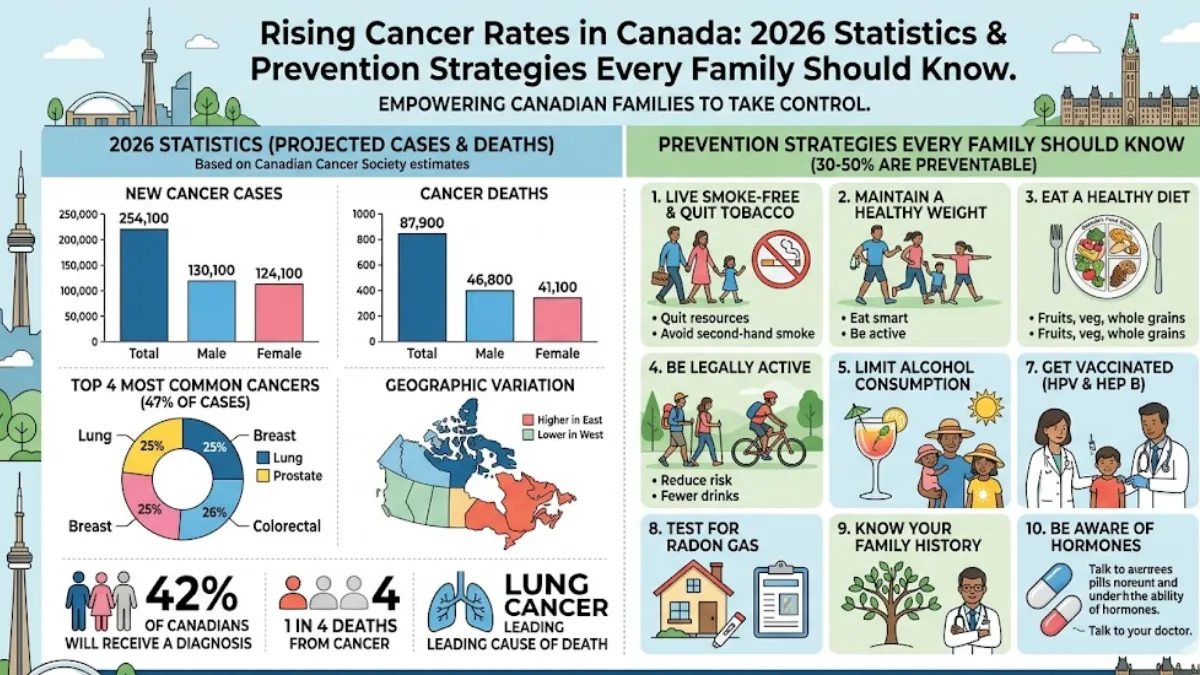
A few years ago, cancer felt like something that mostly affected older people. Grandparents maybe. Retired neighbours. Not young professionals juggling work calls in Toronto condos or parents rushing kids through snowy mornings in Calgary.That’s changing. Quietly. Fast too.Canada is now seeing rising cancer rates across several age groups, and health experts are paying close attention to what’s driving it lifestyle changes, environmental exposure, delayed screenings, stress, processed food habits, and even lack of sleep. Sounds dramatic. But the numbers are real.For many Canadians, the biggest question in 2026 is no longer “Could cancer happen?”
It’s more like “What can I actually do to reduce my risk?”Let’s talk about it properly.
Canada’s Cancer Statistics in 2026: What the Numbers Are Showing
According to recent Canadian health trends and oncology reports, cancer cases continue to rise nationwide, especially in densely populated provinces like Ontario, British Columbia, and Alberta.Some of the fastest-growing concerns include:
- Colorectal cancer in younger adults
- Breast cancer diagnoses increasing in women under 50
- Lung cancer still remaining one of the deadliest forms
- Prostate cancer rates climbing with aging demographics
- Skin cancer linked to UV exposure and tanning habits
And honestly, one detail shocked many healthcare professionals.Younger Canadians are now getting diagnosed earlier than previous generations in certain cancer categories. Not everywhere. But enough to raise alarms.Lifestyle has changed massively over the last decade. More sedentary jobs. More ultra-processed food. More stress. Less movement.Tiny habits. Big impact.
Why Are Cancer Rates Increasing in Canada?
There isn’t one single cause. That would almost be easier.Instead, experts believe multiple factors are combining together.
1. Delayed Screenings After Healthcare Backlogs
During the pandemic years, many Canadians postponed medical appointments and cancer screenings.Some skipped mammograms. Others delayed colonoscopies because wait times felt impossible.Unfortunately, early detection matters a lot in cancer survival rates.
Especially for:
- Breast cancer screening in Canada
- Colon cancer testing
- Lung cancer CT scans for smokers
- Cervical cancer checks
A diagnosis caught early can change everything.
2. Processed Diets and Sedentary Lifestyles
Modern Canadian life is convenient. Too convenient sometimes.Food delivery apps. Desk jobs. Winter months indoors. Long commutes. It all adds up slowly.
Research continues linking obesity, high sugar intake, processed meats, alcohol consumption, and inactivity with increased cancer risks.Not instantly. But over years.And many people don’t realize that daily habits matter more than occasional “healthy weeks.”Consistency wins here.
3. Environmental and Workplace Exposure
Certain Canadian industries expose workers to higher cancer-related risks.
Examples include:
- Construction materials
- Mining exposure
- Chemical manufacturing
- Diesel exhaust environments
- Long-term asbestos exposure
This is one reason searches for
- “best cancer insurance Canada”
- “occupational cancer claims”
- “workers compensation cancer Canada”
have increased recently.People want protection. Financially and medically.Makes sense honestly.
The Most Common Cancers Affecting Canadians in 2026
Breast Cancer
Still one of the most diagnosed cancers among Canadian women.The good news? Survival rates improve significantly with early screening and modern treatments.
More women are now searching for:
- private health screening Canada
- breast imaging clinics near me
- genetic cancer testing Canada
Preventive healthcare is becoming more proactive now.
Colorectal Cancer in Younger Adults
This trend worries doctors quite a bit.Cases among adults under 50 have risen steadily across North America, including Canada.
Symptoms often get ignored at first:
- Stomach discomfort
- Fatigue
- Blood in stool
- Sudden weight loss
People assume it’s stress or diet issues. Sometimes it is. Sometimes not.That’s why routine screening matters even when you feel “mostly okay.”
Lung Cancer
Smoking rates may have declined overall, but lung cancer remains deadly because it’s often discovered late.There’s also increasing discussion around:
- vaping risks
- wildfire smoke exposure
- urban air pollution
- second-hand smoke
Especially after severe wildfire seasons in western Canada.Air quality affects more than people think.
How Canadians Can Lower Their Cancer Risk
No prevention plan is perfect. That’s important to say upfront.But certain habits genuinely reduce risk over time.Small steps count. Seriously.
Stay Active Year-Round
Canadian winters make this harder. Everyone knows that.
But even:
- indoor walking
- home workouts
- yoga
- short gym sessions
can improve long-term health outcomes.Movement helps regulate hormones, weight, inflammation, and immune function.Your body notices.
Improve Food Choices Gradually
You don’t need extreme diets.Actually, most nutrition experts recommend sustainable changes instead of aggressive restrictions.
Helpful habits include:
- eating more fibre
- reducing processed meats
- increasing vegetables
- limiting alcohol
- drinking more water
Simple. Boring maybe. Effective though.
Don’t Ignore Screenings
This might be the biggest one.Many Canadians avoid screenings because they feel nervous, busy, or financially stressed.But catching cancer early often means:
- lower treatment costs
- higher survival rates
- fewer complications
- better quality of life
Preventive healthcare can literally save years.
The Financial Side of Cancer in Canada
Healthcare in Canada covers many treatments, but not everything.That surprises people.Additional costs may include:
- prescription medications
- travel for treatment
- private specialists
- home care support
- lost work income
This explains growing searches around:
- critical illness insurance Canada
- best health insurance plans Canada
- cancer treatment financial support
Families want backup plans before emergencies happen.And honestly? That’s smart planning, not fear.
Mental Health and Cancer Prevention Are More Connected Than People Think
Stress alone doesn’t “cause” cancer directly in most cases. But chronic stress affects sleep, hormones, immune health, eating patterns, and alcohol use.Which indirectly matters a lot.Canadian mental health professionals increasingly encourage:
- stress management
- outdoor activity
- therapy access
- community support
- sleep improvement
Health is rarely just physical.Everything connects eventually.
Written by Editorial Staff Author
Expert editorial team providing accurate and insightful information.